Disposable dinnerware maths for 20, 25 and 50 guests

Disposable dinnerware is sold by total piece count, which is a strange unit if you are buying for a specific number of people. A 350-piece set serving 50 guests is seven pieces each; a 40-piece set is not a set for 40 people. Getting this wrong is why hosts end up washing real plates halfway through.
Piece count is not guest count
The number in the product title is the total number of items in the carton, added together across plate sizes, cups, napkins and cutlery. A 350-piece set described as serving 50 does so because 350 divided by 50 is seven: a dinner plate, a dessert plate, a cup, a napkin and three pieces of cutlery.
Whenever a listing gives both a piece count and a guest count, the guest count is the one to plan with. Where it only gives a piece count, divide by seven for a full place setting or by three for a dessert-and-drink service.
What a place setting really needs
A sit-down meal needs a dinner plate, a dessert or side plate, a napkin, a cup and cutlery. A buffet needs the same minus the side plate, because people load one plate. A dessert-only service needs a small plate, a fork and a napkin, and nothing else.
Deciding which of those three you are running before you shop cuts the order by up to half. Most people default to the sit-down count and then serve a buffet, which is where the excess in the cupboard comes from.
The items that always run out first
Cups and napkins, without exception. Guests take a fresh cup when they change drink and a napkin whenever anything is passed round, so both get used at roughly twice the rate of plates. Sets are balanced one-for-one, so the balance is wrong for real behaviour.
The practical answer is to buy the set for the plates and cutlery and add a separate pack of cups and napkins at about double. It is cheaper than buying a second full set, which is what happens when the cups go at nine oclock.
Plate size matters more than plate count
A ten-inch dinner plate holds a real meal. A seven-inch plate is for cake, appetisers or a light buffet, and a guest given one for a main course will come back for a second. Sets that pair the two sizes are doing so deliberately, and swapping them mentally is a common planning error.
Weight is the other half of it. A thin plate flexes when a guest holds it in one hand, which is exactly what a buffet requires them to do. If the meal will be eaten standing up, plate rigidity matters more than pattern.
Coordinated sets versus mixing
A coordinated set solves the problem of matching colours across four different products, which is worth something when the table is the decoration. The trade-off is that you are locked into that sets ratio of items, including the cup-to-plate ratio that will not survive the evening.
Mixing gives you control over quantities and lets you put the colour where it shows. Napkins and cups are seen constantly; the dinner plate spends the meal covered in food. Spending on the visible items and keeping the plates plain is the usual compromise.
Seasonal patterns and the leftover problem
A strongly seasonal pattern is unusable eleven months of the year. If you are buying a holiday set, buy it for this occasion rather than in a quantity meant to last, because the excess will still be in a cupboard next December.
Plain colour sets in a seasonal palette solve this. Deep green and red plates read as festive on a decorated table and as ordinary plates the rest of the year, so overbuying costs nothing but storage.
Cutlery counts and what people actually pick up
Sets usually include a fork, knife and spoon per guest. In practice a fork is used at almost every party, a spoon at anything with dessert or soup, and a knife far less often than a set assumes. Ordering forks separately in a higher count and letting the knives sit is normal.
For a finger-food party you may need no cutlery at all beyond serving pieces, which changes the arithmetic completely. It is the single easiest place to over-order on a large event.
Checking a set before the day
Open the carton when it arrives rather than the morning of the party. Count the plates against the listing, check nothing is cracked in transit, and confirm the sizes are what you expected. A shortfall found the day before is a small problem; found on the day it is not.
If something is missing or damaged, photograph it and email us. Damaged goods are replaced or refunded and you do not pay return postage on our error — the detail is on the returns page.
Dinnerware sets currently in stock
- Exquisite 350-Piece Red & Green Disposable Dinnerware Set for 50 Guests — $43.89
- Trendables Christmas Green Dinner & Dessert Plates, 40-Piece Disposable Set — $24.99
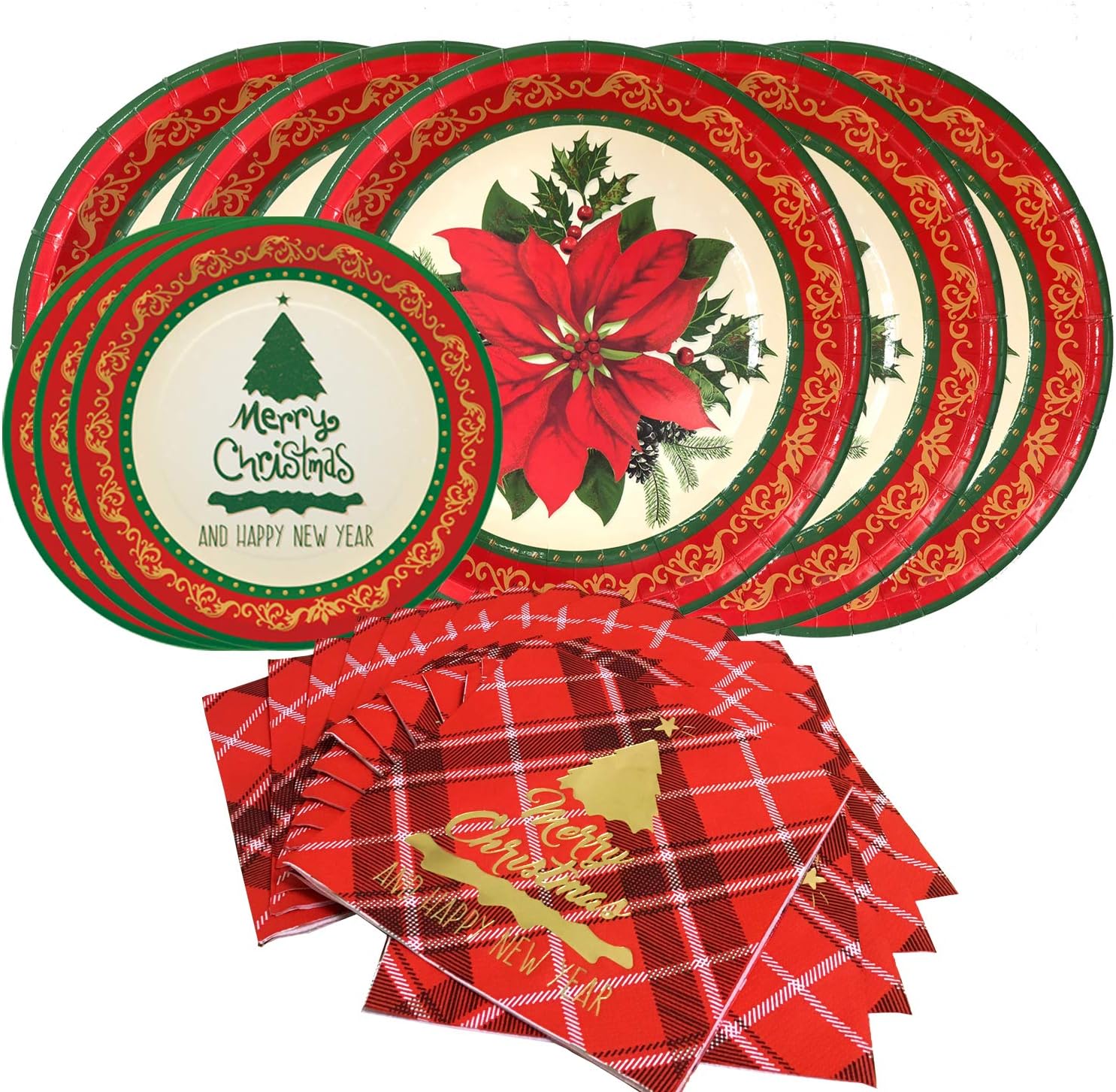
- Gatherfun Christmas Poinsettia Dinner Plates, Dessert Plates & Napkins – Serve 20 — $18.98
- mishunyus 24-Count Light-Up Christmas Party Cups – 16oz Holiday Theme — $16.99
See everything in Party Tableware.
Buying for a specific number
Decide whether you are running a sit-down, a buffet or a dessert service, divide the piece count accordingly, then add cups and napkins at roughly double whatever the set gives you. Do that and the 350-piece set genuinely does cover 50 people.
Questions about anything above? Our FAQ covers the usual ones, the Shipping Policy has the delivery detail, and you can contact us directly — we answer within one business day.